Monday, 28 November 2016

Saturday, 26 November 2016
Monday, 21 November 2016
Paper no 4 Assignment
TO EVALUATE MY ASSIGNMENT PLEASE CLICK HERE.
Department of English
M.K Bhavnagar University
Name: Nagla Drashti P.
Roll no: 15
Class: M.A : Sem-1
Year: 2016-2018
Assignment Topic: Raja Rao’s Kanthapura a critical
study
E-mail address: nagladrashti38@gmail.com
Submitted: Smt S.B Gardy
Department of English Maharaja
Krishnakumarsinhji Bhavnagar
University,Bhavnagar.
Assignment topic
Paper no-4
Raja Rao’s kanthapura a critical study:
- About the Raja Rao:
Born Nov.8,1908, Hassan,
Mysore,south india-died july 8,( 2006, Austin, Texas,U.S) Indian
writer of english-language novels and short stories.
Descended from a distinguished
brahman family in southern India,Rao studied(B.A.,1929)at Nizam
college,Hyderabad,and then left India for france to study literature
and historyat the university of Montpellier andthe sorbonne.His first
novel ,Kanthapura (1938),dealt with the Indian independence movement.
After reaturning to India in 1939,he spent the war years editing a
journal and engaging in underground activities again the British.
After world war ll he alternated between India and France before
finally joining the faculty at the University of Texas at Austin in
1966;he became professor emeritus there in 1980.
- Rao’s second novel:
The Serpent and the
Rope(1960),
Considered
his masterpiece,is a philosophical and somewhat abstact account of a
young intellectual Brahman and his wife seeking spiritual truth in
India, France, and England;it plays on the dialogue between Orient
and Occident. His other novels ae the allegorical The Cat and
shakespeare:A Tale of India(1965);Rao’s short stories were
collected in the Cow of the Barricades and other stories (1947)and
the Policeman and The Great IndianWay:A life of Mahatma Gandhi(1998).
Raja Rao makes with
them a remarkable triad a affiliated with them in time and sometimes
in the choice of themes but not in his art as a novelist or in his
enchanting prose style.A novelist and a short story writer,he too is
a child of the Gndhian age and reveals in his work his sensitive
awareness of the forces let loose by the Gandhian Revolution as also
of the thwarting or steadying pulls of part tradition. His four books
up to date are the novels.
- Kanthapura -1938
- The Serpent and the Rope -1960
- The Cat and Shakspeare-1965
- The Cow of the Barricades-1947
- Kanthapura-The Village:
‘knathapura’
portrays the participation of a small village of south India in the
national struggle called for by Mahatma Gandhi. Imbued with
nationalism,the villegers sacrifice all their material possessions in
a triumph of the spirit, showing how in the Gandhian movement people
shed their narrow prejudices and united in the common cause of the
non-violent civil resistance to the British Raj.
This village is a microcosm of
the traditional Indian society with its entrenched caste hierarchy.
In kanthapura there are Brahmin quarters, sudra quarters,Pariah
quarters. Despite stratification into castes, however, the villegers
are mutually bound in various economic and social functions which
maintain social harmony. The enduring an internal tenacity That
resists external crises,its relationship to past contributing a sense
of unity and continuity between the present and past generations.
Kanthapura may appere isolated and removed from civilization, but it
is compensated by an ever -enriching cycle of ceremonies,rituals, and
festivals.
Rao depicts the regular
involvement of the villagersin Sankara-Jayanthi,Kartik
Purnima,Ganesh-Jayanthi, Dasara,and the Satyanarayana Puja with the
intention of conveying a sense of the natural unity and cohesion of
village society.Old Ramakrishnayya reads out the Sankara-Vijaya day
after day and the villagers discuss Vedanta with him every afternoon.
Religion, imparted through discourses and Pujas, keep alive in the
natives a sense of the presence of God. Participation in a festival
brigs about the solidarity among them. The local deity Kenchamma
protects the villagers “through famine and disease,death and
despair”. if the rains fail,you fall at her feet.Equally secred is
the river Himavathy which flows near Kanthapura.
Conclusion:
Kanthapura
has been described as the most satisfying of all modern Indian
novels. Recognized as a major landmark in Indian Fiction, it is the
story of how the Gandhian struggle for Independence came to one small
village in South India.
Summary
of the novel Kanthapura by Raja Rao:-
Raja
Rao’s first novel Kanthapura(1938) is the story of a village in
South India named Kanthapura. The novel is narrated in the form of
a’Sthalapurana’by an old woman of the village,Achakka
Kanthapura
ia a traditional caste ridden Indian village which is away from all
modern ways of living. Dominent castes like Brahmins are privileged
to get the best region of the village whereas Sudras,Pariahs and
marginalized. The village is believed to have protected by a local
deity called Kenchamma. Though casteist, the village has got a long
nourished of festivals in which all castes interect and the villagers
are united.
The
main character of the novel is Moorthy is a Brahmin who discovered a
half buried ‘linga’ from the village and installed it. A temple
is built there,which later became the center point of the village
life. All ceremonies and festivals are celebrated within the temple
premises.
Hari-Kathas,a
traditional form of storytelling,was practiced in the village. Hari
-kathas are stories of Hari(God). one Hari-katha man,
Jayaramachar,narrated a Hari Katha based on Gandhi and his ideals.
The narrator was arrested because of the political propaganda
instilled in the story.
The
novel begins its couse of action when Moorthy leaves for the city
where he got familier with Gandhian philosophy through pamphletsand
other literatures. He followed Gandhi in letter and spirit. He wrote
home spun Khaddar. Discarded foreign clothes and fought against
untouchability. This turned the village priest,a Brahmin, against him
who complained to the Swami who was a supporter of foreign government
and Moorthy was ex-communicated. Heartbroken to hear it, his mother
Narasamma passed away.
Bade
Khan was a police officer,a non hindu of Kanthapura. He was brought
and supported by the coffee planters who were Englishman. Cosidered
as an outsider, Bade Khan is an enemy of the people who refuses to
provide shelter to him.
After
the death of his mother, Moorthy started living with an educated
widow Rangamma, who took part in India’s struggle for freedom.
Moorthy was invited by Brahmin cleark at Skeffington coffee estate to
create an awareness among the coolies of the estate. When Moorthy
turned up, Bade Khan hit him and the pariah coolies stood with
Moorthy. Though he succeeded in following Gandhian non violence
principle, the incident made him sad and unhappy.
Rachanna
and family were thrown out of the estate because of their role in
beating Bade Khan. Meanwhile,Moorthy continued his fight against
injustice and social inequality and became a staunchest ally of
Gandhi. Taking the responsibility of the violant actions happened at
the estate; Moorthy went on a three day long fasting and came out
victorious and morally elated. Following the footsteps of Gandhi, a
unit of the congress committee was formed in Kanthapura.Gowada,
Rangamma, Rachanna and seenu were elected as the office bearers o the
committee and they avowed to follow Gandhi’s teachings.
The
theme of Kanthapura may be summed up as ‘Gandhi and our village’,
but the style of narration makes the books more a Gandhi Purana than
a piece of mare fiction.Gandhi is the invisible God, Moorthy is the
visible Avatar. The region of the rodmen is Asuric rule, and it is
resisted by the Devdas, the Satyagrahis. The characters sharply
divide into two camps: The Rulers on the one hand and the satyagrahis
on the other. These are -various other divisions too.
Class
structure:
- Untouchability
- Structure of the village
- Superstitions among people
- Exploitation due to class
- Caste and creed
- Class discrimination
- Society and discrimination
We see some points about it:
- Untouchability :
Kanthapura has narrow structure.
In this village have people of many castes. They lived peacefully. In
this village upper class people otherwise they were casted out from
that particular.if a person goes to Pariah’s house, he would to
take bath and go Kashi for Purification purpose.
- Structure of the village:
In the village house were the
symbols of status. There wereless government serrvents in this
village. Those who were there got respect. There was the house of
post master. He lived in two stories building. Palwari had glass
paned windows. The houses are individualized and particularized.
- Exploitation due to class:
The
condition of the village was such that upper class-exploited the
lower class people.the whole description of working labourers is
touching. Remaining hungry of half hungry,poorly-nourished they had
to work very hard.
- Caste and creed:
The
small village symbolically, depicts the country’s condition, during
the time of freedom struggle,people of all castes unanimously united
themselves to fight against the country’s enemy. Educated people
were influenced by Gandhi and became his followers. They cast away
the social norms of caste.
- Conclusion:
Raja Rao’s Kanthapura is one
of the finest novel to come out of mid-twntieth century India. It is
the story of how Gandhi’s struggle for independence from the
British came to a typical village, Kanthapura in South India. Younge
Moorthy, back from the city with”New Ideas”cuts across the
ancients barriers of caste to unite the villages in non-violent
action which is met with violence by landlords and police.
Legendary history of
the region, who knows the past of all the characters and comments on
their actions with sharp-eyed wisdom. Her narrative, and the way she
tells it, evokes the spirut of India’s traditional folk-epics.
Work
cited :
- Hiteshgalthariya2014-2016.blogspot.com
Paper no 3 Assignment
Department
of English
M.K
Bhavnagar University
Name:
Nagla Drashti P.
Roll
no: 15
Class:
M.A : Sem-1
Paper-3(Literary
Theory & Criticism)
Assignment
Topic: Literary Term-Deus ex Machina
E-mail
address: nagladrashti38@gmail.com
Submitted:
Smt S.B Gardy
Department
of English Maharaja
Krishnakumarsinhji
Bhavnagar
University,Bhavnagar.
Assignment
Topic:Deus ex Machina
Paper
no -3
- Introduction
Deus ex Machina is a Latin word,
its meaning “God from the Machine”. The term has evolved to mean
a plot device whereby a seemingly unsolvable problem is suddenly and
abruptly resolved by the inspired and unexpected intervention of some
new event, character, ability or object. Depending on how its done,
it can be intended to allow a story to continue when the writer has
“painted himself into a corner” ans sees no other way out, to
surprise the audience, to bring the tale to a happy ending, or as a
comedic device.
- Simple definition of Deus Ex Machina
A character or thing that
suddenly enters the story in a novel, play, movie etc and solves a
problem that had previously seemed impossible to solve.
Euripides was one of the most
prominent users of Deus Ex Machina. Some scholars believe that he was
the first writer to employ the device in his tragedies. His work is
often met with criticism for the way he structured his plot and for
his underlying ideas.
- First use in ancient time
The term was used in ancient
Greek and Roman drama, where it meant the timely appearance of a god
to unravel and resolve the plot. The Deus Ex Machina was named for
the convention of the God’s appearing in the sky, an effect
achieved by means of a crane (Greek machine). The dramatic device
dates from the 5th
century BC; a god
appears in Sophocles philoctetes and in most of the plays of
Euripides to solve a crisis by divine intervention.
Since ancient times the phrase
has also been applied to an unexpected savior or to improbable event
that brings order out of chaos (e.g., the arrival, in time to avert
tragedy, of the U.S. cavalry in a western films).
- The term used today
The term Deus Ex Machina is
still used today, however, it has taken on a broader meaning. Deus Ex
Machina is now the phrase used to describe any situation where
something unexpected or implausible is brought into the story line to
resolve situations or disentangle a plot the resolution could come
from a new character, device or event. The definition of this phrase
has also been stretched to include any story resolutions that are not
drawn directly or logically from the preceding plot and defy even the
broad concept of suspension of disbelief. The new and broader
definition of Deus Ex Machina helps authors to such modern works to
end their stories with improbable but more acceptable conclusions. A
well-used example of this is the “it was all a dream” or “it
was all in his/her head”.
In ancient theater, it was a god
or goddess that was introduced. Normally , a member of what was
referred to as the Olympian twelve: Zeus, Poseidon, Hera, Demeter,
Apollo, Artemis, Athena, Ares, Aphrodite, Hermes, Hephaestus.
Euripides used Deus Ex Machina
more frequently than any of the other tragedians, but he also used it
in a different manner. He went beyond utilizing it to solve difficult
plot issues instead, Euripides would use the Deus Ex Machina to
provide divine criticism, approval, disapproval and insight into
mankind and its actions. Euripides brought in the gods and goddesses
also to incorporate.
- Example of Deus Ex Machina in Fairy Tales
- Cinderella’s fairy godmother comes and solves all of her problems by magically creating a dress, coach an servants so that Cinderella can go to the ball.
- Pinnochio’s blue fairy rescues him several times during the course of the story.
- Gandalf seems to return from the dead just when Frodo needs him so that he can survive and continue his journey with the ring.
- In the ancient Greek myth about Jason and Medea, the sun god sends a chariot to take Medea way from her husband and back to her home in Athens.
- Prince charming and his enchanted kiss seems to save the day in Sleeping Beauty.
- In Beauty and the Beast, the beast seems to have died, but Belle’s love saves the day and he returns to life.
- In the Lord of the flies, the boys are suddenly rescued by a passing ship.
- Examples of Deus Ex Machina in literature
- In Euripides’ Medea, Apollo’s chariot comes from the sky to take Medea away of Corinth after she slaughters the King’s family and her own children.
- In William Golding’s novel the lord of the flies, just as the protagonist Ralph is about to be killed by the band of “hunters” at the end of the story, a ship appears from nowhere onto the island, drawn by the smoke produced by the wildfire on the island one of the ship’s officer rescues Ralph. He and the rest of the boys are then taken from the island.
- In Shakespeare’s, as you like it, Hymenaios comes to the mass wedding to sort out the problems of Rosalind’s stay and disguise in the forest of Arden.
- In the Edger Allan Poe story the pit and the pendulum, the unnamed narrator has just been pushed over th edge of the bottomless pit when he reaches up and grabs the arm of the french general who has seized the fortress where the narrator has been imprisoned.
- In Shakespeare’s Hamlet, Hamlet is sent to England and (unknowingly) to his death after killing Polonius later, it is revealed that while on the boat Hamlet discovered he was to be killed and re-wrote the letter, condemning him (his schoolmates Rosencrontz & Guildenstern are executed instead) afterward, Pirates inexplicably commandeer Hamlet’s boad, spare his life, and send him back to Denmark.
- In Shakespeare’s Hamlet, Fortinbras arrives at the ending
scene
to take control of Denmark. It can be concluded that Fortinbras’
arrival prevents anarchy throughout Denmark, which would have been a
result of Hamlet’s and Claudius’ scheming. Their actions cause
the entire royal family and potential royal family candidates to
disappear.
- First used in literature:
Aristotal was the
first to use Deus ex machina as a term to describe the technique as a
device to resolve the plot of tragedies.it is generally deemed
undesirable in writing and often implies a lake of creativity on the
part of the author.the reason for this are that it does not pay due
regard to the story’s internal logic and is often so unlikely that
it challenges suspension of disbelief,allowing the author to conclude
the story with an anlikely,though perhapes more palatable, ending.
- Example:
Deus ex machina was also used
by Charls Dickens in Oliver Twist,when in the very peak of
climax,Rose Maylie turns out to be the long-lost sister of Agnes, and
therefore Oliver’s aunt;and she marries her long-time sweetheart
Harry,allowing Oliver to live happily with his saviour,Mr.Brownlow.
- Criticism:
The
deus ex machina device has many criticisms attached to it,mainly
referring to it as inartistic,too convenient,and overly simplistic.on
the other hand,champions of the device say that it opens up
ideological and artistic possibilities.
- Ancient Criticism:
Antiphanes was one of the
device’s earliest critics.Antiphanes believed that the use of the
“Deus ex Machina”was a sign that the playwright was unable to
properly manage the complications of his plot.
When
they don’t know what to say
and
have complately given up on the play
Just
like a finger they lift the machine
and
the spectators are satisfied.
- Modern criticism:
Following Aristotle,Renaissance
critics continued to view the deus ex machina as an inept plot
device,although it continued to be employed by Renaissance
dramatists.
Towards
the end of the 19th
century,Friedrich Nietzsche criticised Euripides for making tragedy
on optimistic genre via use of the device,and was highly skeptical of
the”Greek cheerfulllness”,prompting what he viewed as the
plays’”blissful delight in life”.the deus ex machina as
Nietzsche saw it was symptomatic of socratic culture,which valued
knowledge over Dionysiac music and ultimately caused the death of
tragedy.
Nietzsche argued
that the deus ex machina creats a false sense of consolation that
ought not to be sought in phenomena.His denigration of the plot
device has prevailed in critical opinion.
Work
Cited:
- Wikipedia
- www.uvm.edu
Paper no 2 Assignment
Department
of English
M.K
Bhavnagar University
Name:
Nagla Drashti P.
Roll
no: 15
Class:
M.A : Sem-1
Year:
2016-2018
Paper-2(The
Neo-Classical Literature)
Assignment
Topic: Political & Philosophical Background of Gulliver’s
Travels
E-mail
address: nagladrashti38@gmail.com
Submitted:
Smt S.B Gardy
Department
of English Maharaja
Krishnakumarsinhji
Bhavnagar
University,Bhavnagar.
Assignment
topic
Paper
no-2
Philosophical
& Political background of Gulliver’s Travels:
- Introduction about the book:
Swift has at least two aims in
Gulliver’s Travels besides merely telling a good adventure story by
emphasizing the six-inch height of the Lilliputians, he graphically
diminishes the stature of all human nature and in using the fire in
the Queen’s chambers the rope dancers, the bill of particulars
drawn against Gulliver, he presents a series of allusions that were
identifiable to his contemporaries as critical of Whig
politics.
- In his first book:
Why, one might ask, did Swift
have such a consuming contempt for the Whigs? This hatred began when
Swift entered politics as the representative of the Irish Church.
Representing the Irish bishops, Swift tried to get Queen Anne and the
Whigs to grant some financial aid to the Irish Church. They refused
and Swift turned against them even though he had considered the his
friends and had helped them while he worked for Sir William Temple.
Swift turned to the Tories for political allegiance and devoted his
propaganda talents to their services using certain political events
of 1714-18, he described in Gulliver’s Travels many things that
would remained his readers that Lilliputians folly was also English
folly and particularly, Whig folly. The method, for example-- which
Gulliver must used to swear his allegiance to the Lilliputians
Emperor parallels the absurd difficulty that the Whigs created
concerning the credentials of the Tory ambassadors who signed the
treaty of Utrecht.
Swift’s craftiness was
successful. His book was popular because it was a compelling
adventure tale and also a puzzle. His readers were eager to identify
the various characters and discuss their discoveries and as a result,
many of them saw politics and politicians from a new perspective.
Within the broad scheme of
Gulliver’s Travels, Gulliver concerned with family and with his
job, yet he is confronted by the Pigmies that politics and political
theorizing make of people. Gulliver is utterly incapable of the
stupidity of the Lilliputian politicians, and we are always aware of
the difference between the imperfect moral life of Gulliver’s, and
the petty and stupid political life of emperors, prime ministers and
informers.
- In his second book:
In the second book of the
travels, Swift reverses the size relationships the he used in book
one. In Lilliput, Gulliver was a giant; in Brobdingnag, Gulliver is a
midget. Swift uses this difference to express a difference in
morality. Gulliver was an ordinary man compared to the amoral
political midget in Lilliput. Now, Gulliver remains an ordinary man,
but the Brobdingnagian are moral men, they are not perfect, but they
are consistently moral, only children and the deformed are
intentionally evil.
Gulliver is revealed to be a
very proud man and one who accepts the madness and malice of European
politics parties and society as natural. The Brobdingnagian King,
however, is not fooled by Gulliver the English, he says, are “odious
vermin”.
In book one and two, Swift
directs his satire mare toward individual targets than firing
broadside at abstract concepts. In book one, he is primarily
concerned with Whig politics and politicians rather than with the
abstract politicians. In book two, he elects to reprove immoral
Englishmen rather than abstract immorality. In book three, Swift’s
target is somewhat abstract - pride in reason - but he also singles
out and censures a group of his contemporaries whom he believed to be
particularly depraved in this exaltation of reason.
- In his third book:
In book three, Laputan
systematizing is exaggerated, but Swift’s point is clear and
concrete. Such systematizing is a manifestation of proud rationalism.
The Laputians think so abstractly that they have lost their hold on
common sense. They are so absorbed in their abstraction and musical
shapes. Everything is relegated to abstract thoughts, and the result
is mass delusion and chaos.
In a similar fashion, Swift
shows that philology and scholarship betray the best interests of the
Luggnaggians; pragmatic scientism fails in Balnibarbi; and
accumulated experience does not make the Struldbruggs either happy or
wise. In his topical political references, Swift demonstrates the
viciousness and cruelty, as well as the folly, that arise from
abstract political theory imposed by selfish politicians. He also
cites the folly of Laputan theories and the Laputan King by referring
to the immediate political blunders of the Georges.
- In the forth book:
In the last book of the Travels,
Swift shows us the folly of the people who advance such theories. In
his time, it was a popular notion that a reasonable gman was a
complete man. Here, Swift shows us a reason exalted. We must judge
whether it is possible or desirable for man. The Houyhnhnm are super
reasonable. They have all the virtues that the static and deists
advocated they speak clearly, they act justly and they have simple
laws. They do not quarrel or argue since each knows what is true and
right. They do not suffer from the uncertainties of reasoning that
afflict man, but they are so reasonable that they have no emotions.
They are untroubled by greed, politics or lust. They act from
undifferentiated behavior. They would never prefer the welfare of one
of their own children to the welfare of another Houyhnhnm simply on
the basis of kinship.
Very simply, the Houyhnhnm are
horse, they are not humans and this physical difference parallels the
abstract difference. They are fully rational, innocent and
undepraved. Man is capable of reason, but never wholly or
continuously - passionate, proud and depraved. In contrast to the
Houyhnhnm, Swift presents their precise opposite; the Yahoos,
creatures who exhibit the essence of sensual human sinfulness. The
Yahoos are not merely animals; they are animals who are naturally
vicious.
Midway between the poles of the
Houyhnhnm and the Yahoos, Swift places Gulliver. Gulliver is an
average man, expect that he was became irrational in his regard for
reason. Gulliver is so disgusted with the Yahoos and so admires the
Houyhnhnm that he tries to become a horse, when Gulliver reaches
home, Gulliver hates his family because they look and smell like
yahoos. He is still capable of seeing objects and surfaces
accurately, but he is incapable of grasping true depths of meaning.
Swift uses the technique of
marking abstractions concrete to show us that super-reasonable horses
are impossible and useless models for humans. They have never fallen
and therefore have never been redeemed. They are incapable of the
christian virtues that unite passion and reasons. Neither they nor
the Yahoos are touched by grace or charity. The Brobdingnagian are
possible to humans. These virtues are the results of grace and
redemption. Swift does not press this theological point, however.
- Conclusion:
In
Gulliver’s travels we see that there are many example of political
and philosophycal background.in Swift’s four books we see that he
give us many example about the political and philosophical background
in his first book he compaire Lilliputians with the Gulliver,and in
the second book he compaire Gulliver with the Brobdingnagians,in the
third book he compaire Gulliver with Laputans,and his last book he
compaire Gulliver with the Houyhnhnms.
We can see that in Swift’s
Gulliver’s travels that in his four voyages Gulliver learn about
more realities about life. He learn truth about life and how another
people different from him. To know about this such kind of people he
hate her family and family members.when he come at his home after
some years he can’t adjust in his family and he feels that he live
in between the animals.there is not any smart and intelligent
people,in his forth voyage he meet with very strange animals,who is
Houyhnhnms,who is hourses. To meet with them Gulliver think that this
animals are more than smarter than the humans. So in four voyages
Gulliver face many political and philosophycal crises.
Work cited:
- Cliffs notes.com
Paper no 1 Assignment
M.K
Bhavnagar University
Name:
Nagla Drashti P.
Roll
no: 15
Class:
M.A : Sem-1
Year:
2016-2018
Paper-1(The
Renaissance Literature)
Assignment
Topic: Temptation of Eve in Milton’s Paradise lost
E-mail
address: nagladrashti38@gmail.com
Submitted:
Smt S.B Gardy
Department
of English Maharaja
Krishnakumarsinhji
Bhavnagar
University,Bhavnagar.
Assignment
topic
Paper
no-1
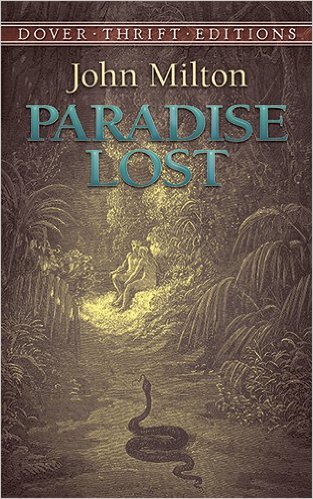
- what is the meaning of temptation:
Temptation is a fundamental desire to engage in short-term urges for enjoyment,that threatens long-term goals. in the context of some religious,temptation is the inclination to sin. Temptation also describes the coaxing or inducing a person into committing such an act,by manipulation or otherwise of curiosity, desire or fear og loss.
In th context of self-control and ego depletion,temptation is described as an immediate,pleausrable urge and/or impulse that disrupts an individuals ability to wait for the long-term goals,in which that individual hopes to attain. Tamptation scene in the Milton’s paradise loss:
“Dream not of other world”,the angel Raphael warns Adam in Milton’s paradise lost(vlll.175). we see that in Milton’s paradise lost that the Eve is dreams about another world which she will achive knowledge and power,and her wish was fullfilled when eve succumbs by Satan’s temptation and she eats fruit from the tree of knowledge.After eats the fruit she feels that she is awakening from her dream and looking at the garden of Eden.Satan give Eve with a golden chance to gain knowledge and powerto become God-like.Now Eve become supirior than the Adam,she is not equal to Adam.she find out some independence from her husband.Now Eve shifting her loyalty away from God and Adam,she going with Satan on her way and find her identity in the Eden garden.To gain knowledge and Godliness and also gain independence from her unequal partner with Adam.
In book iv,Eve awakening but she don’t know that how she was come into the Eden garden.And Eve’s first thought are of “where and what [she]was,whence thither brought, and how”(paradise lost,iv451-52)and Eve now in curiosity to know her identity,and also because of that she disobey the God. At that time Eve is already distant from God because now she awakens in the its own shade and not in the God’s light throught paradise lost, Eve is identified with her own dreams now the Eve feels like “otherness” of eden, Eve is an outcast and to find meaning of her life.At the moment when she is awakening, Eve first see her reflection in the water, which she thinks is another being this watery, wavering image of Eve extends in Milton’s poem,and that moments puts Eve in a weak position, for Eve this image and reflection is only a shadow of Adam,and think about that,who is the real likeness of God.For some time Eve thinks about her existance,Eve stares of her reflection and think that would have “pined there in vain desire”(iv.466). If God had not called her away.
To eat the fruit of knowledge persistance and longing are dominant in Eve’s nature even after Eve learns the creation story of God and she has Adam for a companion,now Eve has yearn for more knowledge.Because now she wishing the place where she was secure for herself. In the garden of Eden through knowledge,Eve progressively “moves from uncertainly to security and contentment”(Langford, 120).
To know about such reality Eve shifts her loyaltyaway from the God to more concrete realities of Satan and thr tree of knowledge.possesing “attributesdifferent from Adam, God and paradise…..Eve seeks and has the potentialto find alternative worlds in her search for completeness and acceptance in a masculine environment.Her ability to experience alternative worlds is what brings disorder into paradise(Langford,119)
Full of self- purpose, Eve exploresher surroundings in order to find answer to her questions of identity.staring at her reflection in the water,Eve feels happy and secure.God ,however,tears Eve away from her dream world, her world of contentment. Eve’s brif but significant bondage to her reflection shows that she loves herself and longs to understand better,for the reflection is of herself. This,however,is not Narcissism, because Eve thinks thatthe reflection in the water is if another being, not of her.when God inteervenes in Eve’s pining over her reflection,Eve recognizes”a certain inherent futilityin her existence”(Langford,121),so she turns towards the more concrete world of Eden to seek meaning in her life. Neverthless, the world of Eden holds no satisfactory answers for Eve.God himself tempts Eve with giving her a companion whose image she is.Eve “has lost priority in her world;not only has someone preceded her but she is,in a sense,a copy of that as yet unknown other being”.(Langford,130)
Fleeing fron Adam when she first sees him, Eve flies from patriachy and ownership. By claiming that Eve is his “otherself”(x,128).Adam commends ownership over Eve and this in turn brings Eve to question her role in Eden. Is the merely a companion made to satisfy the whims of Adam, or does she serve a function-a function that is her own -in paradise?.Now Eve enjoys her life in Eden garden, Eve feels that she exists merely as an extansion of the wish -fullfilling fantasy of Adam’s dream and that she too has her own dreams that are not allowed to come into the waking world.Luring Eve to the tree of knowledge, Satan provides Eve with a means ti fullfill her desire of learning more about her identity,and to make a “fully existential use of the intellect,devoted to temporal choice in terms of everlasting concerns”(Frye,48).
Knowledge is powerful, and Eve hunger for knowledge.created “sufficient to have stood though free to fall”(paradise lost,iii.99),Adam and Eve are Gods in their realm of Eden, free to reason and to govern God’s other creations. As Eve tells the Serpent,”we live law to our-selves,our reason in our low”(ix,653-54). To wish to attain the same level of power as God, however,is to lose all. This is because the hierarchy of heaven and earth must be maintained if choas is to be repelled. Eve,with her limited knowledge of the world, is egocentric and does not know or care about the greater good-she is only concerned about satisfying her hunger for knowledge and power. Eve is naive and ignorant:she cannot grasp the meaning of death,and she believes that adam and she are”not capable of death or pain”(iv.283). Thus,almost subconsciously, Eve dismisses God’s warning that Adam and she will die should they eat from the tree of knowledge. Although perfect at birth, Eve in mutable. As the Angel Raphael states:”enough is left besides to search and know “(vii.125)and Eve is bursting with more than “enough”curiosity. Ignorance is bliss, and Eve’s blissful existance is shattered when Satan tells her about thre powerful fruits from tree of knowledge. In order to fill this vaid in her life that is no longer blissful,Eve must continue to pursue knowledge. Knowledge is food for Eve’s soul but she does not know how to contain her appetite.
- Conclusion:
At the end of this assignment we something say about the Eve’s flattery by Satan. In book no-5 Eve dreams about Satan and marvels at the latter’s boldness in tasting the forbidden fruit. Eve is flattered when Satan calls her “fair angelic Eve”, and this suggests that she is uncconsciously delighted at the possibility of becoming an angel and living in heaven. Having eaten the forbidden fruit because she wishes to become godlike and Adam’s equal, Eve does not wish to die alone or let Adam love another “Eve”she is resolved to stray further from God’s path for her and to have Adam to share in her fate:
Shall I to him make known
As yet my change,and give him to partake
Full happiness with me, or rather not,
But keep the odds of knowledge in my power.
(paradise lost,ix.817-825)
Without copartner? So to odd what wants
In female sex,the more to draw his love,
And render me more equal, and perhaps,
A thing not undesirable, sometime
Superior;for inferior who is free?
(paradise lost,ix.817-825)
In this both paragraph we can see that Eve say about the situation without his partner Adam. She explain that if she eat the fruit of knowledge and she become superior than his partner Adam, so she think that to eat this fruit by Adam both are become equal in the heaven. Because Adam loves Eve so much that’s why he eat this fruit.Now she has no fear about the death because she and her partner both are eat this fruit,and if even God give them any punishment for this kind of sin then both are accept this and go to the earth.
In this book no -9 we see that how Eve is tempted by Satan, and how she is driven by Satan to eat the forbbiden fruit of knowledge. and we can also see that how Eve is happy to see her reflection in the water, and to know about herself.
Work cited :
www.oocities.org
Subscribe to:
Posts (Atom)
Paper no -15 Mass Communication and Media studies (Assignment)
To Evaluate my Assignment click here Name: Nagla Drashsti P. Roll no: 8 Paper no : 15 Mass Communication and Media studies...
