Friday, 10 November 2017

Thursday, 9 November 2017
Tuesday, 31 October 2017
Paper no 12 Assignment
Roll no: 9
Paper no : 12 English Language Teaching
Class: M.A : Sem-3
Year: 2016-2018
Enrollment no : 2059108420170021
E-mail address: nagladrashti38@gmail.com
Submitted: Smt S.B Gardy
Department of English Maharaja
Krishnakumarsinhji Bhavnagar
University,Bhavnagar.
Assignment topic: Language Learning Stratagies
Language learning strategies
In learning a language, we follow the advice that
practice makes perfect, and patience is a helpful virtue.
The world can be your classroom—through home or school.
Explore these options to find strategies of learning and using a language that match your interests, strengths and challenges. Use the Internet and technology as an environment to make your tasks fun and interesting.
Skills include listening, speaking, memorization, reading, writing, and test taking. At the beginning memorization and repetition are important, but do not be discouraged if you seem to go too slowly.
Listening and understanding
Practice listening!
Infants “listen” for more than a year before they can say anything close to “mom” or “dad”.
Watch videos and listen to music in your language, download Internet files with “speech” in the language. Try to recognize words, even sounds. Don’t bother trying to understand, just get used to the sound of the language.
Use the language lab.
Prepare yourself by reading exercises, then put them aside and listen.
Only speak or write when asked to.
When others in class speak,
listen for what they say and mentally build images of their answers—in the language itself.
Listen while a tutor or friend reads to you—
maybe even something as simple as a children’s book.
Make friend with a native speaker and practice!
Practicing listening when learning a language
an essential component to both understanding and reproducing sounds,
as well as the rhythm, accent and inflections of speech.
Not everyone has access to a native speaker, class or lab
but your desktop, laptop and handheld technologies can help.
Listening practice
Download a media program that has the text of what is said.
Review the text one sentence at a time and
familiarize yourself with the vocabulary.
(Study the grammar as a separate exercise and focus now on the listening/speech)
Follow a sentence several times while listening
until you are comfortable with its pronunciation in the context of the sentences.
Without looking into the transcript,
repeat the sentence (say it aloud) exactly as you heard it.
Record your best effort and compare.
Listen to the text in short paragraphs or chunks.
Look away and try to summarize in your words the content.
Record and listen to your summary for review.
Listen to the whole conversation or story without interruption.
Summarize this "whole" and record, listen and compare.
Speaking
Reading silently is not productive:
use your voice! Read aloud: think of it as training your mouth to make the new sounds!
Drills:
Learn a short standard sentence, then substitute vocabulary, even words you look up for fun.
Subject and verbs can change (I am going; you are going; etc.)
Objects can change (I buy a car; I buy a CD; etc.)
In class, if your “answer” does not come to mind
repeat the question in the language, or use your new language to say that you don’t know, or need help! For this last, prepare a standard response that you can fall back on, but be prepared to respond to a question that follows your response! Stay in the mind set of the language, giving your brain time to work in the new language.
Vocabulary
Be inventive in acquiring new words
Post note cards around your room to learn and identify what is in the room, refrigerator, computer, car, etc. Speak the list, and if the word has gender, or is singular/plural, make sure you use the article!
Create a visual thesaurus.
Draw an image of a new vocabulary word
Create a concept map of a word with synonyms, opposites, images, scenes, etc.
Look up new words
and their definitions in the new language’s dictionary or online, not in language pairs (for example, French-English). Write out the definition.
Add one synonym or antonym.
Memorizing:
acronym, acrostic, rhymes, loci, keywords, image-naming, chaining
Reading
Do not read word-by-word, or translate word-by-word.
Prepare yourself for a reading:
study its vocabulary first; review the advance questions.
Then put aside everything and just read, even twice.
Do not look up vocabulary while reading.
Read a phrase or sentence as a thought to get its sense or meaning.
Do not write in your text book or reading.
Separately develop a vocabulary list as above.
Go beyond your textbook!
Children’s books are illustrated and easy to read!
Websites are rich opportunities to explore your hobbies in other languages,
and have common vocabulary that gives you a sense of what is written.
(Google advance search will let you enter key words and choose a language for results!)
Read/sing song lyrics of the language!
As your skills advance, read novels,
but read for the story, not vocabulary.
Read a chapter, then if you see repetitive vocabulary, look it up and then read again.
As you advance through the novel, you will forget about vocabulary for the most part.
Writing
Some languages have unfamiliar alphabets and ways of writing.
Practice writing these alphabets to both learn correct orthography (correct writing), and vocabulary!
Develop writing assignments with the seven stages in your language
Write out sentences you have practiced orally.
Carefully construct patterns and then write out the sentences with substitute words--multiple times. If you have spell check and the “autocorrect” grammar feature in your word processing, use it!
When you get corrections, re-write them.
Correct what you got wrong, even repeating in order to embed it in your mind.
Grammar
Read a short clear easily understandable explanation of a grammar rule.
Find several examples of the rule
Check whether you have mastered the examples
Create your own examples drawn from your daily life,
or in conversations you could have with a friend, classmate, or even a family member.
If you know how to categorize the grammar rule, search the Web for more examples in dialogues, essays, stories. Create variations or your own examples.
Technology
Create flash cards
whether digital or on paper
Explore using your IPod, MP3, CD in the language
in your car, and at moments when you are waiting or walking or biking, etc.
Some studies have even showed results during sleep!
Use the Internet; search for websites.
Play games, read newspapers, look up your hobby, research for other subjects you are studying, etc.
Watch videos and movies in your new language.
Learn the words to popular songs and sing along!
Environment
Immersion!
Think of creating an environment in your room where you can be in contact with your language.
Visit centers and organizations that cater to foreign nationals and immigrants
International student centers, neighborhood and education centers, language and bi-lingual associations, national halls, consular offices, library, etc.
Study daily—develop a foreign language habit
Think of studying as you would for a sport or music: a series of skills that need practice!
Don’t miss a class!
And get to know at least one other student to study with.
Risk! Be fearless in making mistakes, and getting correction.
Would an athlete object when his or her coach corrected certain moves?
So also learning an instrument needs direction from a popular musician.
This is the role of a teacher or native speaker!
Think of building your skill set
Basics lead to more complicated variations:
for example, use “old” vocabulary to practice new grammar
Study with a friend, in a group,
involving yourself in speaking and listening. Play a game online or in the group in the language
Relax and enjoy yourself!
Do not worry about what you cannot remember, or cannot yet understand, or cannot yet say. You are learning and improving. The language will gradually become clearer in your brain as new connections are made, but this will happen on a schedule that you cannot control. So sit backs and enjoy. Just make sure you spend enough time with the language. That is the greatest guarantee of success.
Tests
Testing in language learning often expects you to write, speak, etc.
Ask the teacher which skill (listening, speaking, writing, grammar, vocabulary, etc.) is tested! Prepare specifically for that skill.
Work cited:www.studygs.net
Paper no 10 Assignment
Roll no: 9
Paper no : 10 American Literature
Class: M.A : Sem-3
Year: 2016-2018
Enrollment no : 2059108420170021
E-mail address: nagladrashti38@gmail.com
Submitted: Smt S.B Gardy
Department of English Maharaja
Krishnakumarsinhji Bhavnagar
University,Bhavnagar.
Assignment topic: “Mourning Becomes Electra” A Tragic Play in Greek Tradition with Freudianand Lacanian Underpinnings
Mourning Becomes Electra” – A Tragic Play in Greek Tradition with Freudian and Lacanian Underpinng

American playwright Eugene O’ Neill’s “Mourning Becomes Electra” is a continuation of the Greek tradition. It is rare to find two principal complexes “Electra” and “Oedipus” in one work of art. Here we have both as parallel themes. The tragic implications as will be observed are of the kind that generates emotions of purgation and emotional relief. However, it’s set in a modern (20th century) milieu. The characterization, the story line, the plot are all reflective of the ancient traditions. The names and sequence have been modified to serve the playwright’s intentionality. The substitution is shown with the main characters resembling the principal dramatis personae of the past: Lavinia Mannon – Electra; Christine Mannon – Clytemnestra; Ezra Mannon – Agamemnon; Captain Adam Brant – Aegisthus; Orin Mannon – Orestes; Captain Peter Niles – Pylades. Instead of the Trojan War, here in the background we have the American Civil War. Clytemnestra had waited for ten years for her husband to return from the conflict. Although she had governed well, she had committed the mistake of taking on a lover in the form of Aegisthus. With him she had conspired to put to death her hero husband. In the play under review, it is Christine who has cuckolded Ezra Mannon. Christine is far more venomous than Clytemnestra. Whereas the latter had some grievance because her spouse had sacrificed their daughter Iphigeneia to please the gods; Christine had no such anger to be redressed. For her it was a simple case of husband change. Having got bored or fed up with one Patriarch, she wanted to experience the ecstasy of love. Up to this point the story may be taken as a recasting of the Greek myth. What happens ahead is O’Neill’s own interpretation. In this case the daughter Lavinia too is in love with the mother’s paramour and hence an opponent. There is a strong psychoanalytical stance as the daughter is expressively preoccupied with “Electra” complex. She is consumed by love for father and is obsessively involved in revenge for his death. Christine is sly and malicious and she plans the murder in a cunning manner. Knowing that the husband has a heart condition, she lets it be known in the public about the gravity of his ailment. Meanwhile she conspires with Brant to make sure that the plans do not prove abortive. She asks for poison with the stratagem being that on his return she would copulate with him and in a fit of frenzy make him suffer from an induced heart attack. It happens as planned and when Ezra asks for his medicine, she gives him the poison. Consequently he dies, only to give birth to a series of violent revenge killings. When the brother Orin returns from the war, the sister Lavinia manoeuvres him in a situation where he kills Brant. Before he does so, the reader/audience has to undergo the sordid experience of yet another psychological aberration, in the form of incestuous relationship between mother and son. Thus the killing of Brant serves three purposes; the father is avenged, the mother is punished and the rival is eliminated. The cursed house of Atreus (Mannon) suffers multiple moral lapses. There is incest between the brother and sister. In all the tragic happenings, it is Lavinia who is the prime factor of personality shortcomings. She would neither like her brother to have a normal relationship with Hazel nor allow herself to have ties with Captain Peter Niles. In the end, she drives Orin to madness and suicide just as she had driven her mother to frustration and suicide. Finally she draws the curtains on her own self and opts for the life of a recluse. A mood of tragedy prevails over the entire unfolding of the dramatic sequences. All the characters yearn for respite and redemption but there is none. The most pitiable individual is the mother Christine who one feels deserves a break from the monotony and misery of a star-crossed marriage. It is in her death that the audience reach the climax of tragic empathy. The therapeutic effect is felt as the viewer is shocked into a trance like state of cataclysm.
.
No play is ever written with a critical theory in mind. The creative writer doesn’t adopt a framework within which he has to put together his ideas. Such an attitude would place a severe restriction on his literary creation. Once the intended piece of literature takes a final shape and comes in the public domain, it is then that literary criticism and appreciation is applied. So is it with Mourning Becomes Electra. O’Neill is a master craftsman but in this play it so appears that he was writing within the psychological and psychoanalytical framework. The play opens with ordinary people gossiping about the extra marital affairs of Christine, wife of Ezra Mannon. This is a Freudian start as sex is the base of human emotions. We come across the servant/gardener Seth who has the role of chorus of the old Greek tragedy. His comments are in the psychoanalytical tradition as he gives a free narration of the past, present and the future of the Mannon family. The arrival of Ezra Mannon introduces Lacan’s concept of the “Law of the Father”. He is the perfect patriarch who has exhausted himself in the struggle for gender and phallic supremacy. He served in the army, then became the Mayor of the town, then a Brigadier-General in the civil war. On top of all he was a judge. When the head of the family is the be-all and end-all, it is natural that his offspring are likely to be stunted while growing in the shade of this majestic tree. This dwarfing of personality gives birth to castration complex of Lacan. The son feels obliged to love only one woman that is his mother. In the Freudian tradition this love to begin with may be innocent – the natural baby feeling for mother can get transformed into carnal emotion with clear physical characteristics. Same is the case with daughter Lavinia. She is in love with her father which Freud would interpret as a consequence of Electra complex. This is explained in the play by her obsession for Adam Brant – her mother’s lover. Instead of going for the more benign and gentle suitor Captain Peter Niles she is consumed by the passion for the look alike of her father – Adam Brant. The playwright tells us that the lover has all the features of Ezra Mannon. They look one and the same. Therefore, she becomes a natural enemy of her mother. When it becomes clear to her she cannot possess what she desires, she decides to put an end to the object of desire. The death of Ezra Mannon through a heart attack induced in a moment of extreme stress is both clinical and psychological in the Freudian context.
The theme of incest that runs through the play can be viewed in the background of Lacan’s Mirror Stage Theory. Incest is an extreme form of self love. Freud tells us that sex is the key to life as it builds new connections and bonds. When a boy meets an unknown girl the first attraction is physical and then gets converted into other forms. This is how human civilization has flourished. Sex is the driving force for the procreation of the species. The term that he gave for this was libido. No wonder the most successful people in the past were those who had the greatest number of sexual liaisons. They became the tribal chief with at times more than fifty wives. For Freud this libido was a tidal wave which once unleashed could not be stopped till its complete unfolding. In Mourning Becomes Electra the free flowing libido is represented in the dreams of south Pacific islands. The natives on the island would move without clothes, ever ready for mating. As opposed to this the Mannon mansion is restrictive and suffocating from sexual expression point of view. The two young offspring Lavinia and Orin are incapable of healthy bonding. Their sexual desire cannot find expression outside the concrete walls of their habitat. The brother is doomed to be a lover for his mother as well as his sister. In the same way Lavinia finds joy in love with Orin or with Ezra or with her father image Adam. These characters view their consummation in life through intercourse within their habitat. It is only Catherine who wishes to break herself free from the solitary confinement. She is ready to undertake the perilous sea journey with the naval captain Adam Brant. The sea in Freudian terms is collective unconscious. In the end it is significant that all main characters in the play have Lacanian death. In place of symbolic castration, they undergo physical and emotional extinction. Ezra Mannon and Adam Brant are murdered – one poisoned and the other shot dead. The brother Orin and mother Catherine commit suicide and the daughter Lavinia opts for slow suicide by entombing herself within the mansion. Thus castration is used as a symbol and tool for determining the destiny of dramatis personae. Slip of tongue is both Freudian and Lacanian. Whatever is deeply embedded in the unconscious will find outlet through an involuntary lingual slip. In a tense climax while Lavinia is offloading herself on Peter Niles she addresses him as “Adam” – the real love of her life. The truth dawns on the well meaning Peter that he was being used as a proxy for the real love. In psychoanalysis the analysand in the process of expression, can come out with the hidden truths of the unconscious. Unlike Freud for Lacan there was no need of a formal introspection in respect of time, place and duration. It could be short or long; flexible but genuine talking of the mind was the cure for deep rooted fears of the mind.
The play “Mourning Becomes Electra” has much in common with the grand style of ancient Greek tragedy. It is the suffering of human beings that results in an ennobling effect. The characters have complex psychological hang-ups which contribute towards their doom. On the Greek pattern we have a trilogy with three parts: The Homecoming, The Hunted, and The Haunted. Whereas in the Greek cases, the psychological aspect is disguised and barely identifiable, in O’Neill it constitutes the essence of drama. Let’s see what the critics have to say about the play.
Bette Charlene Werner talks of the mother-son ties in “Eugene O’Neill’s Paradise Lost: The Theme of the Islands in Mourning Becomes Electro” According to Werner “In O’Neill’s vision, maternal abandonment is the original sin, and life is a series of necessary, but futile, attempts of men always to try to remake in some way the original closed pairing of mother and child.” The argument raised is to be heard in psychologists like Jacques Lacan. The drift starts with the child realising that the person who happens to be a mother is also a mistress to some one else. It doesn’t matter even if that some one is one’s own father (may be it is even worse). This sole monopoly over the woman who is variously viewed in the growth phase is the centre of controversy and debate. In terms of possession, the question is who has the proprietary rights, the young child or the grown up male? This sense of ownership starts with the physical and goes to the spiritual dimension. Whether it is the father Ezra, or the son Orin, or the lover Brant, they have one thing in common and that is a feeling of betrayal by the woman towards whom they are attracted. The remedy is to seek comfort in the pristine South Pacific islands. Supposedly the venue is free of sin, guilt and deception. This is at best a charade as the indigenous setting has been given an unrealistic sanctity. Lavinia is ecstatic of the moral laxity and throws herself into orgiastic pagan rituals of the islanders. The island is perceived in terms of a mother’s womb – all inclusive and hermetically sealed from external pollutants. In this quest for the “ideal”, Ezra Mannon tells Christine “You’ll find I’ve changed. I’m sick of death! I want life”. He further adds “I’ve got to make you love me!” (Homecoming, 111). The prenatal slumber is what the islands promise “…the barrier reef singing a croon in your ears like a lullaby!” (Homecoming 1).
Ronald T. Curran in “Insular Typees: Puritanism and Primitivism in Mourning Becomes Electro” in Revue Des Langues Vivantes, Summer, 1975, highlights the lure and fascination of South Pacific in the post Puritanical era. In the play almost all characters seek refuge and escape from the harsh reality by dreaming of starting a new life on a South Pacific island. In psychological terms an island is a symbol of womb – comfort and freedom from predatory forces. They are in search of eternal bliss, which is free from sin and its effects. The prelapsarian dream is forever the ideal of an individual who finds it difficult to negotiate the labyrinths and cul-de-sacs of life. More than anything else it is the promise of uninhibited sex which these islands apparently promised. The image of naked women completely devoid of guilt and the concept of sin for sexual indulgence had a magnetic pull for the white people caught in moral mores of Christianity. Here they could practise their sexual fantasies without the burden of morality. We find that Ezra, Christine, Brant, Orin, Lavinia as also the other members of the cast refer to the refuge from the misery of civilization. Orin refers to Herman Melville’s novel “Typee” as the escape from the hypocrisy and crippling moral taboos of New England. Although the characters have their own interpretation of what this refuge will be, there is a consensus on its viability. Maybe O’Neill was wrong because the islands were a false hope. There is no way to escape the rigours of history and time. Curran reminds the reader that Washington Irving in creating “Rip Van Winkle” tried to do so and failed. His character opts for amnesia by sleeping through the barbarity of war only to find him reduced to an anachronism. The many dimensions of sexual behaviour as propounded by Freud are portrayed by O’Neill in his plays. The psychological relief and therapeutic experience is manifestly felt in “Mourning Becomes Electra”.
An interesting and absorbing comparison with Shakespeare’s “Hamlet” is drawn by Horst Frenz and Martin Mueller “More Shakespeare and Less Aeschylus in Eugene O’Neill’s Mourning Becomes Electra” (American Literature, 1966. The authors strive to show the “different concept of action that separates O’Neill’s trilogy from the Oresteia”. To begin with we have the same type of murder for the aging father – Hamlet’s father as well as Ezra Mannon, unlike Agamemnon both die of poison. The discovery of poison makes Lavinia sure of the guilt of mother just as the ghost drives home the truth for Hamlet. “Mannon’s dying words: she’s guilty not medicine are like ‘Remember Me’ of Hamlet’s father”. In response to the demand of filial commitment, Hamlet gives up the love of Ophelia and Lavinia says ‘no’ to Peter’s proposal. There is much in common between Shakespeare and O’Neill. Both seek inspiration from the Greek myths but grow out from the same to complement each other. In the final analysis O’Neill’s case is profoundly psychological, just as Hamlet is a drama of psychologically motivated characters.
Joseph Wood Krutch is of the opinion that “Mourning Becomes Electra” has all the “virtues… which one expects in the best contemporary writing”. It is a unique play as when staged the trilogy was of six hours’ duration. The audience sat through the lengthy exposure as if in search of the need for redemption. In O’Neill’s time much of the western world was still in the grip of Puritanism. His characters reflect “a conflict between Puritanism and healthy love. Its impact is immediate for “it means the same thing that “Oedipus” and “Hamlet” and “Macbeth” mean namely, that human beings are great and terrible creatures when they are in the grip of great passions and that the spectacle of them is not only absorbing but also at once horrible and cleansing”. It is the “cleansing” dimension that is of interest to us. No matter the language of O’Neill’s play is not as elevated as that of the referred Shakespearean dramas, it has the power to invoke the passion of pity and terror. Although written in the early 20th Century, the play is equally relevant in today’s environment of fast changing society in Africa, Middle East and Asia.
The relevance of the play is firstly in terms of cultural emancipation. In the third world (irrespective of the continent) we are still living in the Victorian Age. The excessive clothing worn by both male as well as female, which is typical to our current ethos, was the norm in Europe some two hundred years back. The desire to use a head scarf by Muslim women, which has become a serious problem in France and parts of the United Kingdom, can be understood in the context of social liberation. Like the west, we in the east may have absorbed the modern technology and may be using computers with equal proficiency but when it comes to culture, there is a yawning gap. Some scholars misinterpret this gap in ideological and religious terms. Actually there is nothing religious or ideological about it. It is a simple case of intellectual distancing. In the journey of civilization the third world has not reached the bridge of 21st century. It is not fair to expect them to adopt the characteristics of the west without leapfrogging them into 2010. Mourning Becomes Electra will forward fast the reader through exposure to themes and issues which are taboo in Asian and African societies. It will shock them and compel them to have a new look at their social behaviour. Some of the things that are presently pushed under the carpet or explained away as witch craft, possessed by the devil or black magic, would be understandable in psychological and psychoanalytical terms.
Puritanical attitude prevails in much of the Asian and African societies. Sex is the single biggest issue for the people. It is an obsession and a subject of discussion at social gatherings and wherever people assemble. The reason for it is that unlike the West which decided to raise the lid, the third world has kept the issue in sealed compartments. The need to demystify sex is profound. Mourning Becomes Electra is not a sex play but has profoundly dealt with sex issues. It has shown the complex nature of sexual drive and how it can influence relationships. In the process it has exposed the hitherto held false beliefs of sacrosanct relations. Human specie is unique in sexual behaviour which has a universal and global orientation. There is nothing like occidental and oriental sex; sex is sex and this is what the play conveys. Like the heavy coverings of Victorian clothing, there are layers and layers of masking which do not allow a realistic appraisal of a situation. Most sex transgressions are viewed as criminal behaviour and punished accordingly. A rapist or a homosexual could be stoned to death or hanged in public to satisfy the public wrath. The play will help in giving a new dimension to the thought process.
Psychology and psychoanalysis are two absent disciplines in Africa and Asia. Even when available, there is extreme reluctance to utilise the facility. This has given birth to malpractices quite often by charlatans who disguise as blessed with miracle cures. There is a flourishing trade of healers and charm possessors who exploit the simple country folk or urban middle class citizens. More than half of the population suffers from psychosomatic diseases but the treatment is either homeopathic or traditional or placebo allopathic. The true remedy is to be found in psychological and psychoanalytical experience. Mourning Becomes Electra is a play rich in this dimension. The audience will be encouraged to read Sigmund Freud and Jacques Lacan. The direct and indirect references to sexual behaviour can only be appreciated if we delve deep into their works. Whereas Freud is available in many of his published works or the works of his daughter Anna Freud, Lacan can be traced to his lectures and the now famous “Seminars”. These seminars are a continuing tradition by his followers and his son-in-law. The play will be a catalyst to this pursuit of knowledge for it has within it the most direct psychic implications.
The fourth dimension of this play is in taking the audience/reader on a magic carpet journey of discovery. In Asia and Africa a common feature of curriculum limitation is absence of trends in philosophic development. Because most of the countries falling in the two continents were victims of the colonial heritage, there is natural distrust of disciplines falling in the domain of thought management. White philosophy is interpreted as hostile to the cultural/religious moorings. This is not only amongst the Muslim population where it is particularly strong but also in religions like Hinduism, Buddhism and the many versions of Christianity. The interesting point to note is that the pre colonial Hellenic philosophy is held in high esteem. Some Muslim scholars go to the extent of even claiming Socrates, Plato and Aristotle to be Muslims. Thus the real cleavage and bone of contention is political rather than intellectual. Africa and Asia stopped the movement of clock when it was enslaved and disowned as well as distanced itself from everything that was western. Thus students graduating from universities/colleges know at best the stated Greek philosophers. They are innocently unaware of the march of history and literary thought. For instance movements like Empiricism, Marxism, Feminism, Existentialism, Dadaism, Colonialism, Post Colonialism, Modernism, Post Modernism etc are not in the vocabulary of the average student. Mourning Becomes Electra is a multi era play and has within it some aspect of twentieth century thought. It is condensed philosophy and a plausible guide for an individual embarking on a scholastic venture. Before the curtains are drawn, it can be said that the play is highly recommended for the initiated and the neophyte.
Monday, 30 October 2017
Paper no 11 Assignment
Roll no: 9
Paper no : 11 Post Colonial Literature
Class: M.A : Sem-3
Year: 2016-2018
Enrollment no : 2059108420170021
E-mail address: nagladrashti38@gmail.com
Submitted: Smt S.B Gardy
Department of English Maharaja
Krishnakumarsinhji Bhavnagar
University,Bhavnagar.
Assignment topic: Magic realism and New Historicism
in Salman Rushdie’s Midnight's Children
- Magic Realism and New Historicism in Salman Rushdie’s Midnight’s Children
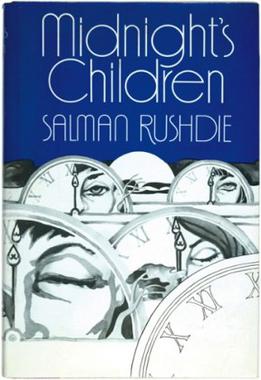
Salman Rushdie, one of the most renowned writers of Indian Diaspora, settled in England, shot into fame through his magnum opus, Midnight’s Children. He was born to an affluent Muslim family in Bombay on 19 June 1947. He grew up in Mumbai and graduated with honors from King’s College, Cambridge. Settled in England, Rushdie’s literary career started with his first novel, Grimus, which was a poor seller. With the publication of his second novel, Midnight’s Children (1981), Rushdie’s fame spread world-wide and the subsequent novels Shame (1983) and The Satanic Verses (1988) made him one of the best contemporary novelists in the world. The allegorical novel The Satanic Verses enraged Muslim fundamentalists including Ayatollah Khomeini who issued a fatwa sentencing Rushdie to death. Midnight’s Children won for him Booker of Bookers prize in 1993. In 2008 it was selected as The Best of Bookers. Midnight’s Children is also the only Indian novel on Time‘s list of the hundred best English-language novels since its founding in 1923.
Rushdie uses the narrative style of magical realism in which myth and fantasy are blended with real life. Midnight’s Children and Shame are examples of magical realism. Merriam-Webster Online Dictionary define magic realism as, “a literary genre or style associated especially with Latin America that incorporates fantastic or mythical elements into otherwise realistic fiction—called also magical realism”(“magic realism”). It is a narrative technique that blurs the distinction between fantasy and reality. Magic realism is characterized by an equal acceptance of the ordinary and the extraordinary. It fuses lyrical and, at times, fantastic writing with an examination of the character of human existence and an implicit criticism of society, particularly the elite. The term was coined first by German art critic Franz Roh in 1925, and Alejo Carpentier first described its current usage in the prologue to his book, El reino de este mundo.
Midnight’s Children is a loose allegory for events in India both before and, primarily, after the independence and partition of India, which took place at midnight on 15 August 1947. In the temporal sense, Midnight’s Children is post-colonial as the main body of the narrative occurs after India becomes independent. The narrative framework of Midnight’s Children consists of tale which Saleem Sinai recounts orally to his wife-to-be Padma. This self-referential narrative recalls indigenous Indian culture, particularly the similarly orally recounted Arabian Nights. The events in Rushdie’s text also parallel the magical nature of the narratives recounted in the Arabian Nights (Stewart).
Saleem Sinai, the narrator of Midnight’s Children, opens the novel by explaining that he was born at midnight on 15th August, 1947, at the exact moment India gained its independence from British rule. He imagines that his miraculously timed birth ties him to the fate of the country. He later discovers that all children born in India between 12 AM and 1 AM on 15th August 1947, are gifted with special powers. Saleem thus attempts to use these powers to convene the eponymous children. He acts as a telepathic conduit, bringing hundreds of geographically disparate children into contact while also attempting to discover the meaning of their gifts. In particular, those children who are born closest to the stroke of midnight possess more powerful gifts than the others. Shiva of the Knees, Saleem’s evil nemesis, and Parvati, called “Parvati-the-witch,” are two of these children with notable gifts and roles in Saleem’s story.
Saleem has to contend with his personal trajectory. His family is active in this, as they begin a number of migrations and endure the numerous wars which plague the subcontinent. During this period he also suffers amnesia until he enters a quasi-mythological exile in the jungle of Sundarban, where he is re-endowed with his memory. In doing so, he reconnects with his childhood friends. Saleem later becomes involved with the Emergency declared by Indira Gandhi and her son Sanjay’s “cleansing” of the Jama Masjid slum. For a time Saleem is held as a political prisoner; these passages contain scathing criticisms of Indira Gandhi’s overreach during the Emergency as well as what Rushdie seems to see as a personal lust for power bordering on godhood. The Emergency signals the end of the potency of the Midnight Children, and there is little left for Saleem to do but pick up the few pieces of his life he may still find and write the chronicle that encompasses both his personal history and that of his still-young nation; a chronicle written for his son, who, like his father, is both chained and supernaturally endowed by history.
Now, nearing his thirty-first birthday, Saleem believes that his body is beginning to crack and fall apart. Fearing that his death is imminent, he grows anxious to tell his life story. Padma, his loyal and loving companion, serves as his patient, often sceptical listener.
Reena Mitra writes on the trajectory of the novel thus:
Midnight’s Children is a literary response to a series of real life situations that have been cleverly fictionalized through allusions, disguised as well as direct, to the country’s recent as well as not so recent past. The novel has an epic sweep covering about six decades in the history of the Indian subcontinent. Book One covers the time from the Jallianwala Bagh incident to April, 1919 to the birth of the protagonist, Saleem, on 15 August, 1947; Book Two extends up to the end of the Indo-Pakistan war in September, 1965, and Book Three envelops the period up to the end of the Emergency in March, 1977, and includes the Bangladesh war as well.
Midnight’s Children can also be considered as a new-historicist novel. The critics of the post-modern period apply the term ‘new historicism’ to interpret literary texts. The term ‘new-historicism’ was coined by the American critic Stephen Greenblatt, whose book Renaissance Self Fashioning: from More to Shakespeare (1980) is usually regarded as its beginning. Peter Barry in his book Beginning Theoryhas given a simple definition of the term new historicism as “it is a method of the ‘parallel’ reading of literary and non-literary texts, usually of the same historical period”. It means that new historicism refuses to privilege the literary text; instead of a literary ‘foreground’ and a historical ‘background’ it envisages and practices a mode of study in which literary and non-literary texts are given equal weight and constantly inform or interrogate each other. Typically, a new historical essay will place the literary text within the frame of a non-literary text. Greenblatt juxtaposes the plays of the Renaissance period with ‘the horrifying colonialist policies by all the major European powers of the era.’
When we say that new historicism involves the parallel study of literary and non-literary texts, the word ‘parallel’ encapsulates the essential difference between this and earlier approaches to literature which had made some use of historical data. These earlier approaches made a hierarchical separation between the literary text, which was the object of value, the jewel, as it were, and the historical ‘background,’ which was merely the setting, and by definition of lesser worth. Barry is of opinion that “the practice of giving ‘equal weighting’ to literary and non-literary material is the first and major difference between the new and old historicism”. Barry continues to write:
The appeal of new historicism is undoubtedly great, for a variety of reasons. Firstly, although it is founded upon post-structuralist thinking, it is written in a far more accessible way, for the most part avoiding post-structuralism’s characteristically dense style and vocabulary. It presents its data and draws its conclusions, and if it is sometimes easy to challenge the way the data is interpreted, this is partly because the empirical foundation on which the interpretation rests is made openly available for scrutiny. Secondly, the material itself is often fascinating and is wholly distinctive in the context of literary studies. . . . Thirdly, the political edge of new historicist writing is always sharp, but at the same time it avoids the problems frequently encountered in ‘straight’ Marxist criticism: it seems less overtly polemical and more willing to allow the historical evidence its own voice.
At the fictional level, Midnight’s Children depicts the events and experiences in the lives of three generations of the Sinai family. The account begins with their day in Srinagar and follows their passage through Amristar, Agra and Bombay to Karachi from where Saleem alone returns hidden in the basket of Parvati, the witch, only to experience the terrors of the Emergency that had been imposed in India.
When one analyses the novel one finds three major aspects of Rushdie’s use of history in the book: (i) the commingling of autobiography and narrative, (ii) the striking breach of chronology and (iii) the search for identity and the meaning of life.
In the novel, there is a frequent forward or backward shift in time that makes it difficult to trace the proper sequence of events in the life of the protagonist. At the very outset, after having given the date of his birth, the narrator somersaults to his thirty-first birthday. He then dives deep into the past only to return to the present, and then to embark upon the future.
In the words of Reena Mitra:
This marked-break in chronology in the novel reveals the author’s intention of giving not a record of events in order of their occurrence but of projecting the basic historical truth as interacting with and affecting the life of the individual, that is chiefly, the author himself as represented by the protagonist. On the one side, we have Saleem’s personal life, and, on the other, corresponding to this is the life and history of the nation. The story traces the various events in the life of the central character that synchronize with major happening in the recent history of India. The parallel that is worked out, though strained at times, is designed to allow an understanding of the individual’s life in terms of historical forces.
Regarding the break in chronology in the novel, it is clear from the very beginning that the author never had in mind a sustained biological account of the life of the hero or a record of historical events in order of time. In the novel, on the one side we have Saleem’s personal life, and on the other, corresponding to this is the life of the nation. Mitra writes:
The story traces the various crises in the life of the protagonist that synchronize with the major events and movements in the history of modern India. The Jallianwala Bagh tragedy, the Quit India Movement, the role of Muslim League, the post-Independence riots, the Five Year Plans, the re-organization of the states in India, the language agitation, the Chinese aggregation, the theft of the sacred relic from Hazrathbal mosque, the war with Pakistan, the independence of Bangladesh, the Emergency and other historical landmarks.
After that, every major event in Saleem’s life is linked with some incident in the life of the nation. Saleem returns to India after a period of exile in Pakistan. In a fit of anger, Saleem resolves to give the nation the right to choose a better future, for he looks upon the country as “not only my twin-in-birth but also joined to me (so to speak) at the hip, so that what happened to either of us happened to us both”. At this critical moment in the life of both, Saleem and the nation, the pace of history accelerates and there are a number of synchronous events on either side. Shiva’s “explosion” into the life of Saleem at the magician’s ghetto coincides with India’s surprising nuclear capability demonstrated with the first nuclear explosions in the deserts of Rajasthan on 18th May 1974. The marriage celebrations of Saleem and Parvati synchronize with the Republic Day festivities in the country and from then onward the parallels drawn between the life of the protagonist and that of the nation continue through Laylah Sinai (Parvati). The moment Laylah enters labour room, Indira Gandhi is found guilty of malpractices in the previous elections. Laylah’s son, Aadam Sinai is born on 25th June 1975, the very day Emergency was imposed in India. He too, like Saleem, is “mysteriously handcuffed to history” and his fortunes are inseparably linked with those of his country. His distress caused by tuberculosis is suspected of having “something darkly metaphorical” in it. It seems to be manifestation of his connection to history. In the words of Rushdie, “. . . in those midnight months when the age of my connection-to-history overlapped with his, our private emergency was not unconnected with the larger macrocosmic disease, under whose influence the sun had become as pallid and diseased as our son”. And then Saleem is arrested and imprisoned. He loses his freedom and he loses with it his silver spittoon swallowed by bulldozers to sever him from “the last object connecting me to my more tangible, historically verifiable past”.
The midnight children are a magic realist device emphasising the continued struggle to come to terms with identity within the polarities of the post-colonial. They are, by virtue of their midnight birth, ‘children of the times,’ as Rushdie has asserted, as much as magical creations. This freedom, at the end of the text, is described as being ‘now forever extinguished,’ and there is a sour irony inherent in Saleem’s thoughts that the children ‘must not become . . . the bizarre creation of a rambling, diseased mind.’ Rushdie implies that Saleem’s generation has failed to consolidate the possibilities inherent in independence. The possibility exists in each passing generation of midnight children, who are the children of each successive era. Each generation, as Saleem muses, will erase the presence of a previous generation that has not yet learnt to define a stable and solid sense identity. The individual voice is swamped by the creeping progression of time and history: nevertheless, the text’s conclusion is open ended. There may be no such thing as a single national identity in the contemporary world, where media and communication link cultures and countries: there is perhaps an interchange of cultures, to varying degrees, between all countries. This delicate ambiguity is emphasised in the final sentence of the text, which links magic with realism, the individual with history, the individual and regional identity and self-assertion with the magnet of the universal. Rushdie weaves a text that fuses tradition and current cultural influences to create an open-ended post-colonial discourse.
The novel draws to a close around 15th August 1978 and ends in a mixed note. In the words of Florence D’Souza:
. . . Saleem’s hypersensitive nose inhales mixed smells—on the one hand, “the excitement of the coming Independence Day,” and on the other “more tarnished perfumes: disillusion, venality, cynicism” (MC 457). His analysis is dispassionate: “…the nearly thirty-one-year-old myth of freedom is no longer what it was. New myths are needed; but that’s none of my business” (MC 458).” (51)
Fantasy is consciously used as a device or a method by many postmodernist novelists. Rushdie has used fantasy ingenuously and admirably in Midnight’s Children. He believed that fantasy could be used as a method for producing intensified images of reality. In the words of Madan M. Sarma:
In Midnight’s Children Rushdie, in fact, presents intensified images of reality as he sees it in the Indian sub-continent in the decades preceding and following India’s independence. The disparate materials pertaining to those times of political upheaval, popular upsurge, growing optimism, and chaotic developments that often bordered on the fantastic could not have been woven together by any other method but that of fantasy.
Rushdie is able to question the contents of colonial power and ideology by accepting an international medium and code, through which he can subvert the very identities of the colonizer. Soumyajit Samanta is of opinion that Rushdie
. . . turns back the table right back on the colonial power by accepting the fluidity of cultures and identity in his very person as well as his multiple fictional selves. History becomes a process, a fluctuation of meaning where the cultural signified, though not lost, is made and remade on the transnational scene. If the colonial powers have tried to reshape history (exemplified well in Conrad’s Heart of Darkness) Rushdie again succeeds in rewriting history and politics by positioning and freeing the colonial subject from racial domination and imperialism. Rushdie’s texts, therefore, engage themselves with the particular historical realities presented by the postcolonial scene by offering to explain how and why the postcolonial writer might be able to defy historically determined relationships of racial dominance as well as cultural subordination.
The colonizer had encroached the colonized’s history and deprived him of his political position in that history. Rushdie through his novels has brought a revisionist attitude to history in re-positioning the postcolonial subject in the panorama of the world. He has thus proved unique in freeing the colonial subject from the colonized’s possession and domination of history and politics.
Work cited : www.profkvdominic.com
Paper no 9 Assignment
Roll no: 9
Paper no : 9 Modernist Literature
Class: M.A : Sem-3
Year: 2016-2018
Enrollment no : 2059108420170021
E-mail address: nagladrashti38@gmail.com
Submitted: Smt S.B Gardy
Department of English Maharaja
Krishnakumarsinhji Bhavnagar
University,Bhavnagar.
Assignment topic: Analysis of two parts of Eliot’s poem “The Waste Land”
T.S.Eliot’s Poem
The Waste Land Section I: “The Burial of the Dead”
Summary
The first section of The Waste Land takes its title from a line in the Anglican burial service. It is made up of four vignettes, each seemingly from the perspective of a different speaker. The first is an autobiographical snippet from the childhood of an aristocratic woman, in which she recalls sledding and claims that she is German, not Russian. The woman mixes a meditation on the seasons with remarks on the barren state of her current existence (“I read, much of the night, and go south in the winter”). The second section is a prophetic, apocalyptic invitation to journey into a desert waste, where the speaker will show the reader “something different from either / Your shadow at morning striding behind you / Or your shadow at evening rising to meet you; / [He] will show you fear in a handful of dust”. The almost threatening prophetic tone is mixed with childhood reminiscences about a “hyacinth girl” and a nihilistic epiphany the speaker has after an encounter with her. These recollections are filtered through quotations from Wagner’s operatic version of Tristan und Isolde, an Arthurian tale of adultery and loss. The third episode in this section describes an imaginative tarot reading, in which some of the cards Eliot includes in the reading are not part of an actual tarot deck. The final episode of the section is the most surreal. The speaker walks through a London populated by ghosts of the dead. He confronts a figure with whom he once fought in a battle that seems to conflate the clashes of World War I with the Punic Wars between Rome and Carthage (both futile and excessively destructive wars). The speaker asks the ghostly figure, Stetson, about the fate of a corpse planted in his garden. The episode concludes with a famous line from the preface to Baudelaire’s Fleurs du Mal (an important collection of Symbolist poetry), accusing the reader of sharing in the poet’s sins

Form
Like “Prufrock,” this section of The Waste Land can be seen as a modified dramatic monologue. The four speakers in this section are frantic in their need to speak, to find an audience, but they find themselves surrounded by dead people and thwarted by outside circumstances, like wars. Because the sections are so short and the situations so confusing, the effect is not one of an overwhelming impression of a single character; instead, the reader is left with the feeling of being trapped in a crowd, unable to find a familiar face.
Also like “Prufrock,” The Waste Land employs only partial rhyme schemes and short bursts of structure. These are meant to reference—but also rework— the literary past, achieving simultaneously a stabilizing and a defamiliarizing effect. The world of The Waste Land has some parallels to an earlier time, but it cannot be approached in the same way. The inclusion of fragments in languages other than English further complicates matters. The reader is not expected to be able to translate these immediately; rather, they are reminders of the cosmopolitan nature of twentieth-century Europe and of mankind’s fate after the Tower of Babel: We will never be able to perfectly comprehend one another.
Commentary
Not only is The Waste Land Eliot’s greatest work, but it may be—along with Joyce’s Ulysses—the greatest work of all modernist literature. Most of the poem was written in 1921, and it first appeared in print in 1922. As the poem’s dedication indicates, Eliot received a great deal of guidance from Ezra Pound, who encouraged him to cut large sections of the planned work and to break up the rhyme scheme. Recent scholarship suggests that Eliot’s wife, Vivien, also had a significant role in the poem’s final form. A long work divided into five sections, The Waste Land takes on the degraded mess that Eliot considered modern culture to constitute, particularly after the first World War had ravaged Europe. A sign of the pessimism with which Eliot approaches his subject is the poem’s epigraph, taken from the Satyricon, in which the Sibyl (a woman with prophetic powers who ages but never dies) looks at the future and proclaims that she only wants to die. The Sibyl’s predicament mirrors what Eliot sees as his own: He lives in a culture that has decayed and withered but will not expire, and he is forced to live with reminders of its former glory. Thus, the underlying plot of The Waste Land, inasmuch as it can be said to have one, revolves around Eliot’s reading of two extraordinarily influential contemporary cultural/anthropological texts, Jessie Weston’s From Ritual to Romance and Sir James Frazier’s The Golden Bough. Both of these works focus on the persistence of ancient fertility rituals in modern thought and religion; of particular interest to both authors is the story of the Fisher King, who has been wounded in the genitals and whose lack of potency is the cause of his country becoming a desiccated “waste land.” Heal the Fisher King, the legend says, and the land will regain its fertility. According to Weston and Frazier, healing the Fisher King has been the subject of mythic tales from ancient Egypt to Arthurian England. Eliot picks up on the figure of the Fisher King legend’s wasteland as an appropriate description of the state of modern society. The important difference, of course, is that in Eliot’s world there is no way to heal the Fisher King; perhaps there is no Fisher King at all. The legend’s imperfect integration into a modern meditation highlights the lack of a unifying narrative (like religion or mythology) in the modern world.
Eliot’s poem, like the anthropological texts that inspired it, draws on a vast range of sources. Eliot provided copious footnotes with the publication of The Waste Land in book form; these are an excellent source for tracking down the origins of a reference. Many of the references are from the Bible: at the time of the poem’s writing Eliot was just beginning to develop an interest in Christianity that would reach its apex in the Four Quartets. The overall range of allusions in The Waste Land, though, suggests no overarching paradigm but rather a grab bag of broken fragments that must somehow be pieced together to form a coherent whole. While Eliot employs a deliberately difficult style and seems often to find the most obscure reference possible, he means to do more than just frustrate his reader and display his own intelligence: He intends to provide a mimetic account of life in the confusing world of the twentieth century.
The Waste Land opens with a reference to Chaucer’s Canterbury Tales. In this case, though, April is not the happy month of pilgrimages and storytelling. It is instead the time when the land should be regenerating after a long winter. Regeneration, though, is painful, for it brings back reminders of a more fertile and happier past. In the modern world, winter, the time of forgetfulness and numbness, is indeed preferable. Marie’s childhood recollections are also painful: the simple world of cousins, sledding, and coffee in the park has been replaced by a complex set of emotional and political consequences resulting from the war. The topic of memory, particularly when it involves remembering the dead, is of critical importance in The Waste Land. Memory creates a confrontation of the past with the present, a juxtaposition that points out just how badly things have decayed. Marie reads for most of the night: ostracized by politics, she is unable to do much else. To read is also to remember a better past, which could produce a coherent literary culture.
The second episode contains a troubled religious proposition. The speaker describes a true wasteland of “stony rubbish”; in it, he says, man can recognize only “[a] heap of broken images.” Yet the scene seems to offer salvation: shade and a vision of something new and different. The vision consists only of nothingness—a handful of dust—which is so profound as to be frightening; yet truth also resides here: No longer a religious phenomenon achieved through Christ, truth is represented by a mere void. The speaker remembers a female figure from his past, with whom he has apparently had some sort of romantic involvement. In contrast to the present setting in the desert, his memories are lush, full of water and blooming flowers. The vibrancy of the earlier scene, though, leads the speaker to a revelation of the nothingness he now offers to show the reader. Again memory serves to contrast the past with the present, but here it also serves to explode the idea of coherence in either place. In the episode from the past, the “nothingness” is more clearly a sexual failure, a moment of impotence. Despite the overall fecundity and joy of the moment, no reconciliation, and, therefore, no action, is possible. This in turn leads directly to the desert waste of the present. In the final line of the episode attention turns from the desert to the sea. Here, the sea is not a locus for the fear of nothingness, and neither is it the locus for a philosophical interpretation of nothingness; rather, it is the site of true, essential nothingness itself. The line comes from a section of Tristan und Isolde where Tristan waits for Isolde to come heal him. She is supposedly coming by ship but fails to arrive. The ocean is truly empty, devoid of the possibility of healing or revelation.
The third episode explores Eliot’s fascination with transformation. The tarot reader Madame Sosostris conducts the most outrageous form of “reading” possible, transforming a series of vague symbols into predictions, many of which will come true in succeeding sections of the poem. Eliot transforms the traditional tarot pack to serve his purposes. The drowned sailor makes reference to the ultimate work of magic and transformation in English literature, Shakespeare’s The Tempest (“Those are pearls that were his eyes” is a quote from one of Ariel’s songs). Transformation in The Tempest, though, is the result of the highest art of humankind. Here, transformation is associated with fraud, vulgarity, and cheap mysticism. That Madame Sosostris will prove to be right in her predictions of death and transformation is a direct commentary on the failed religious mysticism and prophecy of the preceding desert section.
The final episode of the first section allows Eliot finally to establish the true wasteland of the poem, the modern city. Eliot’s London references Baudelaire’s Paris (“Unreal City”), Dickens’s London (“the brown fog of a winter dawn”) and Dante’s hell (“the flowing crowd of the dead”). The city is desolate and depopulated, inhabited only by ghosts from the past. Stetson, the apparition the speaker recognizes, is a fallen war comrade. The speaker pesters him with a series of ghoulish questions about a corpse buried in his garden: again, with the garden, we return to the theme of regeneration and fertility. This encounter can be read as a quest for a meaning behind the tremendous slaughter of the first World War; however, it can also be read as an exercise in ultimate futility: as we see in Stetson’s failure to respond to the speaker’s inquiries, the dead offer few answers. The great respective weights of history, tradition, and the poet’s dead predecessors combine to create an oppressive burden.
The Waste Land Section II: “A Game of Chess”
II. A Game of Chess
The Chair she sat in, like a burnished throne,
Glowed on the marble, where the glass
Held up by standards wrought with fruited vines
From which a golden Cupidon peeped out
(Another hid his eyes behind his wing)
Summary
This section takes its title from two plays by the early 17th-century playwright Thomas Middleton, in one of which the moves in a game of chess denote stages in a seduction. This section focuses on two opposing scenes, one of high society and one of the lower classes. The first half of the section portrays a wealthy, highly groomed woman surrounded by exquisite furnishings. As she waits for a lover, her neurotic thoughts become frantic, meaningless cries. Her day culminates with plans for an excursion ansd a game of chess. The second part of this section shifts to a London barroom, where two women discuss a third woman. Between the bartender’s repeated calls of “HURRY UP PLEASE IT’S TIME” (the bar is closing for the night) one of the women recounts a conversation with their friend Lil, whose husband has just been discharged from the army. She has chided Lil over her failure to get herself some false teeth, telling her that her husband will seek out the company of other women if she doesn’t improve her appearance. Lil claims that the cause of her ravaged looks is the medication she took to induce an abortion; having nearly died giving birth to her fifth child, she had refused to have another, but her husband “won’t leave [her] alone.” The women leave the bar to a chorus of “good night(s)” reminiscent of Ophelia’s farewell speech in Hamlet.
Form
The first part of the section is largely in unrhymed iambic pentameter lines, or blank verse. As the section proceeds, the lines become increasingly irregular in length and meter, giving the feeling of disintegration, of things falling apart. As the woman of the first half begins to give voice to her paranoid thoughts, things do fall apart, at least formally: We read lines of dialogue, then a snippet from a nonsense song. The last four lines of the first half rhyme, although they are irregular in meter, suggesting at least a partial return to stability.
The second half of the section is a dialogue interrupted by the barman’s refrain. Rather than following an organized structure of rhyme and meter, this section constitutes a loose series of phrases connected by “I said(s)” and “she said(s).” This is perhaps the most poetically experimental section of the entire poem. Eliot is writing in a lower-class vernacular here that resists poetic treatment. This section refutes the prevalent claim that iambic pentameter mirrors normal English speech patterns: Line length and stresses are consistently irregular. Yet the section sounds like poetry: the repeated use of “I said” and the grounding provided by the barman’s chorus allow the woman’s speech to flow elegantly, despite her rough phrasing and the course content of her story.
Commentary
The two women of this section of the poem represent the two sides of modern sexuality: while one side of this sexuality is a dry, barren interchange inseparable from neurosis and self-destruction, the other side of this sexuality is a rampant fecundity associated with a lack of culture and rapid aging. The first woman is associated by allusion with Cleopatra, Dido, and even Keats’s Lamia, by virtue of the lushness of language surrounding her (although Eliot would never have acknowledged Keats as an influence). She is a frustrated, overly emotional but not terribly intellectual figure, oddly sinister, surrounded by “strange synthetic perfumes” and smoking candles. She can be seen as a counterpart to the title character of Eliot’s earlier “Love Song of J. Alfred Prufrock,” with whom she shares both a physical setting and a profound sense of isolation. Her association with Dido and Cleopatra, two women who committed suicide out of frustrated love, suggests her fundamental irrationality.
Unlike the two queens of myth, however, this woman will never become a cultural touchstone. Her despair is pathetic, rather than moving, as she demands that her lover stay with her and tell her his thoughts. The lover, who seems to be associated with the narrator of this part of the poem, can think only of drowning (again, in a reference to The Tempest) and rats among dead men’s bones. The woman is explicitly compared to Philomela, a character out of Ovid’s Metamorphoses who is raped by her brother-in-law the king, who then cuts her tongue out to keep her quiet. She manages to tell her sister, who helps her avenge herself by murdering the king’s son and feeding him to the king. The sisters are then changed into birds, Philomela into a nightingale. This comparison suggests something essentially disappointing about the woman, that she is unable to communicate her interior self to the world. The woman and her surroundings, although aesthetically pleasing, are ultimately sterile and meaningless, as suggested by the nonsense song that she sings (which manages to debase even Shakespeare).
The second scene in this section further diminishes the possibility that sex can bring regeneration—either cultural or personal. This section is remarkably free of the cultural allusions that dominate the rest of the poem; instead, it relies on vernacular speech to make its point. Notice that Eliot is using a British vernacular: By this point he had moved to England permanently and had become a confirmed Anglophile. Although Eliot is able to produce startlingly beautiful poetry from the rough speech of the women in the bar, he nevertheless presents their conversation as further reason for pessimism. Their friend Lil has done everything the right way—married, supported her soldier husband, borne children—yet she is being punished by her body. Interestingly, this section ends with a line echoing Ophelia’s suicide speech in Hamlet; this links Lil to the woman in the first section of the poem, who has also been compared to famous female suicides. The comparison between the two is not meant to suggest equality between them or to propose that the first woman’s exaggerated sense of high culture is in any way equivalent to the second woman’s lack of it; rather, Eliot means to suggest that neither woman’s form of sexuality is regenerative.
- Recourse: www.sparknote.com
Subscribe to:
Posts (Atom)
Paper no -15 Mass Communication and Media studies (Assignment)
To Evaluate my Assignment click here Name: Nagla Drashsti P. Roll no: 8 Paper no : 15 Mass Communication and Media studies...
